If you've noticed a puddle forming along your foundation wall every time it rains, you're not alone. Water pooling next to foundation after rain is one of the most common complaints from Winnipeg homeowners — and it's one of the most damaging problems you can ignore. In a city where spring thaw, clay-heavy soil, and intense summer storms all conspire against your home's base, that standing water is a serious warning sign. This post breaks down why it happens, what local homeowners can do about it, and whether gutter guards are actually worth installing on Winnipeg homes.
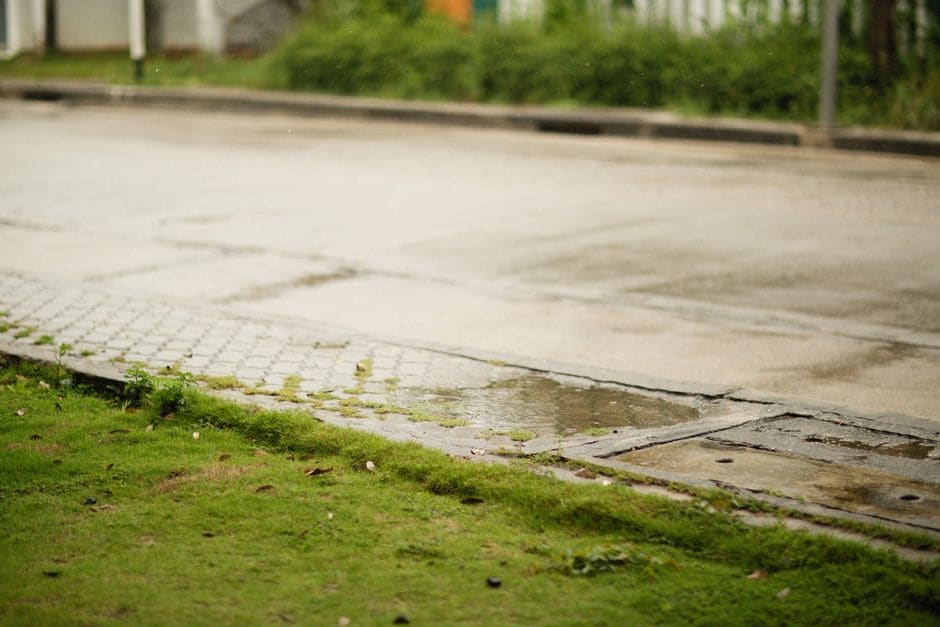
Why Does Water Pool Next to a Foundation After Rain in Winnipeg?
Water pools next to a Winnipeg foundation after rain primarily because of a combination of clogged or undersized eavestroughs, poor lot grading, and the city's clay-dominant soil — which absorbs water slowly and directs runoff straight toward your home's base rather than away from it. Most homes in older Winnipeg neighbourhoods like Transcona, St. Vital, and West Kildonan were built on Red River clay, which swells when wet and shrinks when dry, creating a natural funnel effect along foundation walls. If your eavestroughs are overflowing because they're blocked with elm seeds or cottonwood fluff — both extremely common in Winnipeg — all that roof runoff spills directly onto the ground below and saturates the soil right against your foundation.
Downspout placement is another major culprit. A downspout that discharges water less than two metres from your foundation wall gives it nowhere to go except back toward the house, especially on a flat lot. Winnipeg's relatively low-relief terrain means many properties don't have the natural slope needed to push water away on their own.
What Damage Can Foundation Pooling Cause in Manitoba's Climate?
Manitoba's freeze-thaw cycle makes foundation pooling far more destructive here than in milder climates. Water that saturates the soil against your foundation in October will freeze, expand, and exert enormous pressure on your foundation wall through November and December. Winnipeg regularly records some of the most dramatic temperature swings in Canada, and that repeated expansion and contraction cracks poured concrete foundations, shifts older block foundations, and eventually allows water to seep into basements.
Beyond structural damage, persistent moisture against a foundation leads to mould growth inside the basement, efflorescence (white salt staining on concrete), and deterioration of basement window wells. Homes in lower-lying areas of Winnipeg — parts of Elmwood, parts of the North End, and stretches along the Assiniboine near Charleswood — are especially vulnerable because the water table is already higher in those areas.
Are Gutter Guards Worth It for Winnipeg Homes?
Gutter guards are worth considering for Winnipeg homes, but the type matters enormously given our specific debris conditions. Standard foam inserts and basic screen guards get overwhelmed by Manitoba's elm seeds and cottonwood, which are small enough to slip through or germinate right inside the guard. Micro-mesh gutter guards — which filter debris at a finer level — perform significantly better in Winnipeg conditions and can meaningfully reduce how often your eavestroughs overflow during a heavy summer rain.
That said, gutter guards are not a complete solution to foundation pooling on their own. They reduce eavestrough blockages, but if your downspouts are too short, your grading is wrong, or your lot holds water naturally, guards alone won't fix the problem. Think of them as one layer of a multi-part solution rather than a standalone fix.
Gutter Guard Types: A Winnipeg-Specific Comparison
| Guard Type | Performance with Elm Seeds / Cottonwood | Approximate Installed Cost (per linear foot) | Maintenance Required |
|---|---|---|---|
| Foam Insert | Poor — debris germinates inside foam | $3 – $6 | High — annual replacement often needed |
| Basic Plastic Screen | Fair — fine seeds pass through easily | $4 – $8 | Moderate — clears seasonally |
| Reverse Curve / Surface Tension | Fair — struggles with very fine debris | $8 – $14 | Moderate |
| Micro-Mesh (aluminum or stainless) | Good — best option for Manitoba debris | $12 – $20 | Low — periodic rinse recommended |
How to Stop Water Pooling Next to Your Foundation: A Winnipeg Action Plan
Solving this problem typically requires addressing several systems at once. Here's what local contractors and home inspectors commonly recommend for Winnipeg properties:
- Extend your downspouts: Discharge water at least two metres (six feet) from your foundation. In Winnipeg, splash blocks alone are rarely enough — consider flexible downspout extensions or underground drainage pipes.
- Re-grade around the foundation: The ground should slope away from your house at roughly 6 inches of drop over the first 10 feet. On Winnipeg's clay soil, even a modest grade improvement makes a significant difference.
- Clean or replace your eavestroughs: Overflowing troughs are the most direct cause of foundation-line saturation. If your current system is undersized or damaged, professional eavestrough installation in Winnipeg with properly sized gutters and downspouts is one of the most effective investments you can make.
- Consider a French drain or weeping tile: If grading improvements aren't enough — common on older Winnipeg lots with settled soil — a perimeter drainage system can redirect water before it reaches the foundation wall.
- Install quality gutter guards: Micro-mesh guards reduce the likelihood of overflow, especially during Winnipeg's cottonwood season in June and elm seed drop in May.
If you are considering adding a drainage outlet that connects to the City of Winnipeg's storm sewer system, check current requirements with the City of Winnipeg's Water and Waste department before proceeding. Permits and approved connection points may be required for new drainage tie-ins on residential properties.
What Does It Cost to Fix Foundation Water Pooling in Winnipeg?
Fixing water pooling next to a foundation in Winnipeg typically costs between $500 and $4,000 depending on what work is needed — simple downspout extensions and cleaning run $150 to $400, while full re-grading, new eavestroughs, and gutter guards on an average bungalow can reach $2,500 to $4,000 or more. Catching the problem early is far less expensive than dealing with the downstream consequences: basement waterproofing in Winnipeg can cost $8,000 to $20,000 or more, and foundation crack repairs vary widely depending on severity and access.
Worried About Water Pooling at Your Foundation?
Get a free quote from a local Winnipeg eavestrough expert who can assess your drainage situation and recommend the right fix for your home.
Get My Free QuoteFrequently Asked Questions
How quickly can water pooling next to a foundation cause basement leaks in Winnipeg?
On Winnipeg's clay soil, persistent water pooling can begin to cause visible basement seepage within one to two seasons of consistent exposure, especially if your foundation has any existing hairline cracks. The freeze-thaw cycles of a Manitoba winter accelerate this significantly, as saturated soil expands against the foundation wall every time temperatures drop below zero.
Do I need to re-grade my entire yard, or just the area near the foundation?
In most Winnipeg cases, you only need to address the immediate perimeter — typically the first 6 to 10 feet surrounding the foundation — rather than regrading the entire lot. Adding topsoil and compacting it to create a gentle outward slope away from the house is usually sufficient, though a drainage contractor can assess whether your lot's overall flow pattern is contributing to the problem.
Can I install gutter guards myself, or should I hire a professional in Winnipeg?
Basic screen-style guards can be a DIY project, but micro-mesh guards — the type that performs best in Winnipeg's debris conditions — require precise fitting to the eavestrough profile to work correctly, and improper installation can actually trap debris or cause water to overshoot the gutter. Hiring a local professional ensures the guards are matched to your existing eavestrough size and pitched correctly for Manitoba's heavy rainfall events.